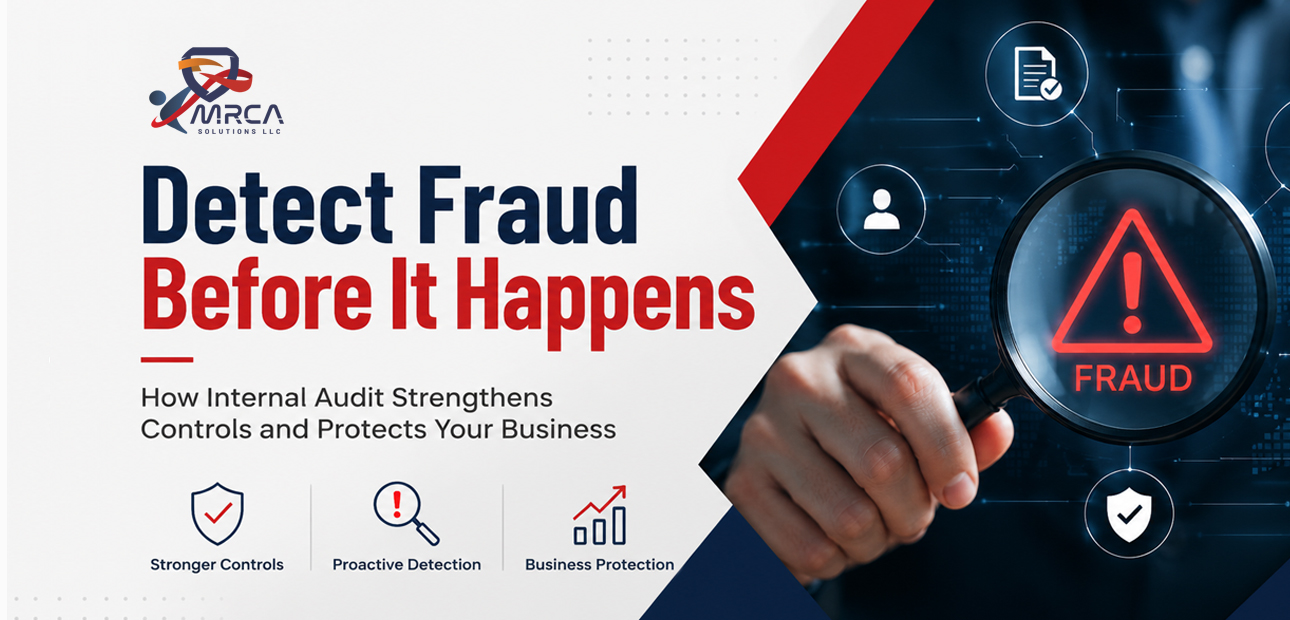
Fraud is one of the most significant risks organizations face today. Whether it involves financial misstatements, asset misappropriation, procurement fraud, or employee misconduct, fraud can result in substantial financial losses, regulatory penalties, and long-lasting reputational damage.
While no organization is completely immune to fraud, businesses with a strong internal audit function are better equipped to identify vulnerabilities, detect suspicious activities, and strengthen controls before fraud escalates.
At MRCA Solutions LLC, we help organizations build effective internal audit programs that not only improve compliance but also serve as a critical line of defense against fraud.
Understanding Fraud in the Workplace
Fraud occurs when an individual intentionally uses deception for personal or organizational gain. It can happen at any level of an organization and often exploits weaknesses in internal controls or oversight.
Some of the most common types of organizational fraud include:
Financial statement fraud
Asset misappropriation
Payroll fraud
Procurement and vendor fraud
Expense reimbursement fraud
Cyber-enabled fraud
Conflicts of interest and bribery
Detecting these activities early is essential to minimizing financial and operational damage.
The Role of Internal Audit in Fraud Prevention
Internal audit plays a proactive role in strengthening an organization’s ability to prevent fraud. Rather than focusing only on identifying fraud after it occurs, internal auditors evaluate systems, processes, and controls to reduce opportunities for fraudulent activity.
A well-designed internal audit program helps organizations:
Identify weaknesses in internal controls
Assess fraud risks across departments
Recommend stronger control measures
Monitor compliance with policies
Promote accountability and transparency
This proactive approach significantly reduces an organization’s fraud exposure.
How Internal Audit Detects Fraud
1. Evaluating Internal Controls
Strong internal controls are the foundation of fraud prevention.
Internal auditors review controls related to:
Financial reporting
Cash handling
Purchasing procedures
Payroll processing
Inventory management
System access permissions
Weak or outdated controls often create opportunities for fraudulent activity.
2. Conducting Risk Assessments
Not every area of a business carries the same fraud risk.
Internal auditors identify high-risk areas by evaluating:
Financial transactions
Third-party relationships
Operational processes
Information systems
Regulatory requirements
Risk-based auditing allows organizations to focus resources where they are needed most.
3. Identifying Unusual Transactions
Internal auditors analyze financial and operational data to detect irregular patterns such as:
Duplicate payments
Unusual vendor activity
Unauthorized transactions
Suspicious journal entries
Abnormal expense claims
These reviews often uncover warning signs before significant losses occur.
4. Reviewing Compliance with Policies
Fraud often occurs when employees fail to follow established procedures.
Internal audit evaluates whether:
Company policies are consistently followed
Approval processes are functioning properly
Segregation of duties is maintained
Documentation is complete and accurate
Regular compliance reviews reduce opportunities for misconduct.
5. Supporting Fraud Investigations
When fraud is suspected, internal auditors help gather evidence, review documentation, and analyze transactions.
They may assist management by:
Reviewing financial records
Examining internal processes
Identifying control failures
Documenting findings
Recommending corrective actions
These efforts support informed decision-making and appropriate organizational responses.
Building a Strong Fraud Prevention Program
Preventing fraud requires more than periodic audits. Organizations should develop a comprehensive fraud prevention strategy that includes:
Regular internal audits
Strong internal controls
Employee ethics and compliance training
Fraud risk assessments
Whistleblower reporting mechanisms
Continuous monitoring of high-risk activities
Creating a culture of integrity is one of the most effective ways to discourage fraudulent behavior.
Benefits of Internal Audit in Fraud Prevention
Organizations that invest in internal audit often experience significant benefits, including:
Reduced Financial Losses
Early detection minimizes the financial impact of fraudulent activities.
Stronger Internal Controls
Audit recommendations help close control gaps and improve operational security.
Improved Regulatory Compliance
Effective internal audits support compliance with legal and industry requirements.
Enhanced Organizational Transparency
Independent audit reviews increase accountability across departments.
Greater Stakeholder Confidence
Investors, boards, customers, and regulators gain confidence when organizations demonstrate strong governance and fraud prevention practices.
How MRCA Solutions Helps Organizations Combat Fraud
At MRCA Solutions LLC, we provide comprehensive internal audit services that help organizations identify risks, strengthen internal controls, and reduce fraud exposure.
Our services include:
Internal audit planning and execution
Fraud risk assessments
Internal control evaluations
Governance, Risk & Compliance (GRC) consulting
Operational and financial audits
Due diligence and investigative support
With more than 30 years of hands-on experience, our team delivers practical, independent insights that help organizations improve governance, strengthen compliance, and protect their assets.