Organizations face a wide range of financial, operational, technology, compliance, and strategic risks. Internal audit can play an important role in helping leadership understand these risks and determine whether internal controls are working effectively.
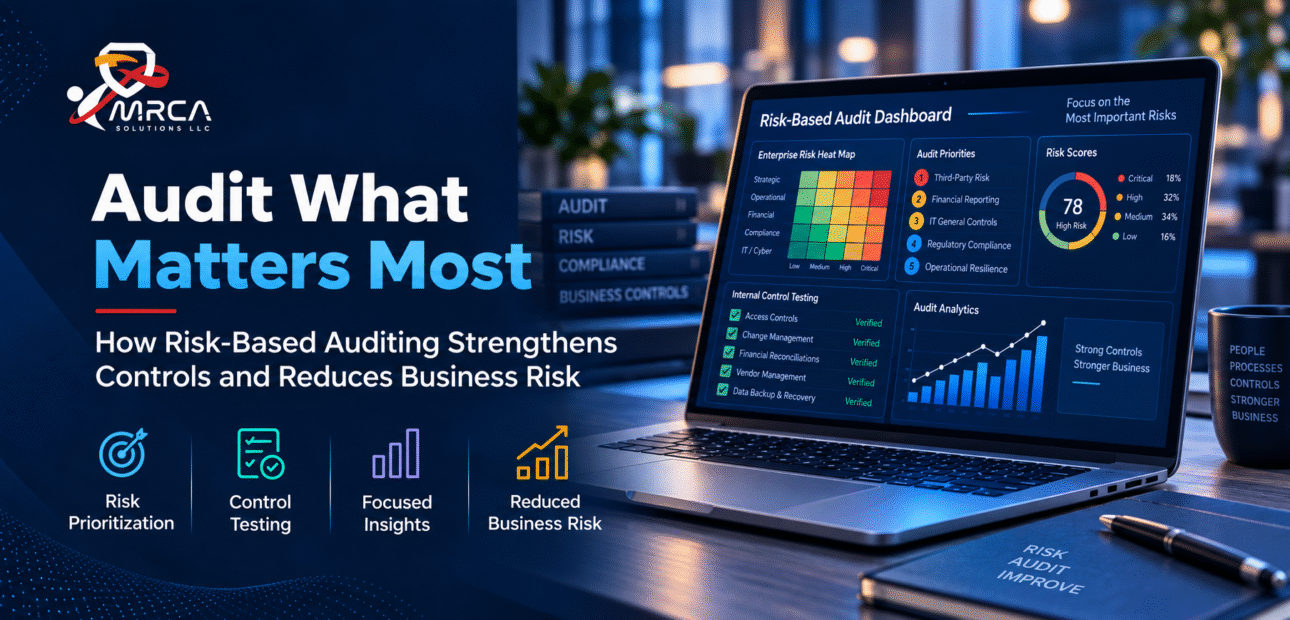
A risk-based internal auditing approach focuses audit resources on the areas that present the greatest potential risk to the organization. Instead of giving equal attention to every process, it prioritizes areas where weaknesses could have the greatest financial, operational, regulatory, or reputational consequences.
What Is Risk-Based Internal Auditing?
Risk-based internal auditing is an approach that uses an organization’s risk profile to determine what should be audited, how frequently it should be reviewed, and where audit resources should be concentrated.
Traditional audit programs may follow a predetermined schedule. A risk-based approach is more dynamic. Audit priorities can change as the organization’s risks change.
For example, a business experiencing significant cybersecurity concerns may need greater audit attention around access controls, data protection, third-party technology, and incident preparedness.
Why Risk-Based Internal Auditing Matters
Organizations have limited time, people, and resources. Auditing every process with the same level of attention may not provide the greatest value.
Risk-based internal auditing helps organizations:
Focus audit resources on high-risk areas
Identify important control weaknesses
Improve risk visibility for leadership
Strengthen internal controls
Support better governance
Improve operational accountability
Identify opportunities for greater efficiency
Align internal audit activities with organizational objectives
The result is an internal audit function that can provide greater strategic value while continuing to evaluate controls and compliance.
Risk-Based vs. Traditional Internal Auditing
A traditional audit approach may rely heavily on a fixed annual schedule. While scheduled reviews can still be valuable, they may not fully reflect changing business risks.
Risk-based auditing asks different questions:
What risks are most significant right now?
Which processes could have the greatest impact if controls fail?
Where have significant changes occurred?
Which areas have experienced previous control issues?
What risks are emerging?
Where does leadership need greater assurance?
This approach allows the internal audit plan to evolve with the organization.
Key Steps in Risk-Based Internal Auditing
1. Understand the Organization and Its Objectives
Internal auditors first need to understand the organization’s business model, strategic objectives, operating environment, and major activities.
This provides the context necessary to determine which risks could prevent the organization from achieving its objectives.
2. Identify and Assess Key Risks
The next step is to identify significant risks across areas such as:
Financial operations
Cybersecurity
Regulatory compliance
Vendor management
Information technology
Human resources
Business operations
Fraud
Data protection
Corporate governance
Risks can then be evaluated based on their likelihood and potential impact.
3. Prioritize the Audit Plan
Once risks are assessed, audit resources can be directed toward the highest-priority areas.
High-risk processes may require more frequent reviews, while lower-risk areas may be audited less frequently.
This helps ensure that internal audit effort is aligned with where the organization needs the most assurance.
4. Evaluate Internal Controls
Internal auditors examine whether controls are appropriately designed and operating effectively.
Depending on the area being reviewed, this may include evaluating:
Policies and procedures
Authorization controls
Segregation of duties
Access management
Reconciliation processes
Monitoring activities
Documentation
Compliance controls
The objective is to determine whether controls adequately address the organization’s identified risks.
5. Report Findings and Recommendations
Audit findings should clearly explain the issue, the associated risk, and the potential business impact.
Recommendations should be practical and focused on improving the underlying control environment rather than simply addressing individual symptoms.
Clear reporting helps management understand which issues require immediate attention and which can be addressed over time.
6. Follow Up on Corrective Actions
An audit provides limited value if identified issues are never addressed.
Follow-up activities help determine whether management has implemented agreed-upon corrective actions and whether those actions have effectively reduced the underlying risk.
Areas That May Benefit From a Risk-Based Audit
Depending on the organization’s risk profile, internal audit may prioritize areas such as:
Cybersecurity and Technology
Reviewing access controls, security processes, data protection, system changes, and cybersecurity governance.
Financial Controls
Evaluating transaction processing, reconciliations, reporting controls, authorization processes, and fraud risks.
Third-Party Risk
Assessing whether vendors and service providers are appropriately evaluated, monitored, and managed.
Regulatory Compliance
Determining whether processes and controls support applicable laws, regulations, policies, and contractual requirements.
Operational Processes
Identifying control gaps, inefficiencies, duplication, and opportunities to improve business processes.
Benefits for Business Leadership
Risk-based internal auditing can provide executives and boards with greater visibility into the organization’s most significant risks.
It can help answer important questions such as:
Are our most important controls working?
Where are our greatest areas of exposure?
Are management’s risk mitigation efforts effective?
Are resources being used efficiently?
Are emerging risks being addressed?
Where should management focus its attention?
This makes internal audit more than a compliance function. It becomes an important source of independent insight and assurance.
Common Mistakes in Internal Audit Planning
Organizations may reduce the effectiveness of internal audit when they:
Use a fixed audit plan without considering changing risks
Focus heavily on low-risk areas
Fail to incorporate emerging risks
Treat compliance as the only audit objective
Do not involve senior leadership in risk prioritization
Perform audits without meaningful follow-up
Focus on individual control failures without considering root causes
A strong risk-based approach keeps the audit function connected to the organization’s current risk environment.
How MRCA Solutions Helps
MRCA Solutions brings extensive experience in internal audit, cybersecurity, governance, risk, and compliance. Our approach can help organizations identify high-risk areas, evaluate internal controls, strengthen accountability, and provide leadership with independent insight.
By connecting internal audit activities with broader organizational risks, MRCA Solutions can help businesses focus their audit resources where they can have the greatest impact.
Frequently Asked Questions (FAQs)
1. What is risk-based internal auditing?
Risk-based internal auditing prioritizes audit activities according to the organization's most significant risks rather than treating every business area equally.
2. How is risk-based auditing different from traditional auditing?
Traditional auditing may rely on a fixed schedule, while risk-based auditing adjusts priorities based on changes in the organization's risk profile and business environment.
3. What areas can be included in a risk-based internal audit?
Areas can include financial controls, cybersecurity, compliance, operations, vendor management, technology, fraud risks, and corporate governance.
4. How does risk-based auditing improve internal controls?
It directs attention toward controls that address the organization's most significant risks, helping management identify weaknesses and prioritize corrective actions.
5. Can smaller organizations use a risk-based internal audit approach?
Yes. A risk-based approach can be particularly useful for organizations with limited audit resources because it helps focus effort on the areas that matter most.
6. Why should organizations consider independent internal audit support?
Independent internal audit support can provide objective insight into risks and controls while helping leadership identify weaknesses and opportunities for improvement.
Conclusion
Risk-based internal auditing helps organizations move beyond a one-size-fits-all audit approach. By focusing on the risks that matter most, internal audit can provide stronger assurance, improve internal controls, and give leadership clearer insight into organizational risk.
When audit priorities are aligned with business objectives and emerging risks, internal audit becomes a valuable strategic resource for improving governance, accountability, and business performance.